


Article
Marketing
Why Smart Businesses Are Using Bing Search Tools
Posted on March 24, 2026
By Caitlin Nelson
October 22, 2026
For many businesses, search strategy begins and ends with Google. While it dominates the market, that narrow focus can leave meaningful opportunities untapped. Bing continues to drive significant search activity—particularly among desktop users and professional audiences—and has evolved into a broader ecosystem that includes local listings, webmaster tools, and AI-driven search experiences.
Businesses that look beyond Google can benefit from less competition, high-value audiences, and new visibility in emerging search environments. Smart SEO and Marketing leaders already know why Bing deserves a place in their strategy. The Marketing Team at KDG feels it's time to share that knowledge—and how Bing Places for Business and Bing Webmaster Tools can help you tap into one of your biggest missed opportunities.
The “Google Only” Mindset is Costing Businesses Visibility
For many businesses, search engine optimization begins and ends with Google. While Google undeniably dominates the global search landscape, this "Google-only" mindset can create blind spots—especially when it leads organizations to ignore other channels that still drive meaningful traffic, visibility, and engagement. Bing is one of the most commonly overlooked platforms in this equation.
Despite perceptions that its market share is negligible, Bing consistently accounts for roughly 7% of the U.S. search market. At scale, that represents a significant volume of searches—amounting to hundreds of millions, and in some estimates over 20 billion searches per month globally.
More importantly, Bing's reach extends beyond Bing.com itself. Through its integration across Microsoft Edge, Windows devices, Yahoo, and other partner platforms, Bing powers a much larger portion of the search ecosystem than many businesses realize. When factoring in these networks, Bing influences a substantial share of desktop-based search activity, particularly in professional environments.
While a 7% market share may seem small in isolation, it becomes far more significant when viewed through the lens of missed opportunity. For many organizations, especially those in competitive industries, even a marginal increase in visibility can translate into meaningful gains in traffic, leads, and revenue.
Ignoring Bing leaves a portion of your potential audience entirely untapped.
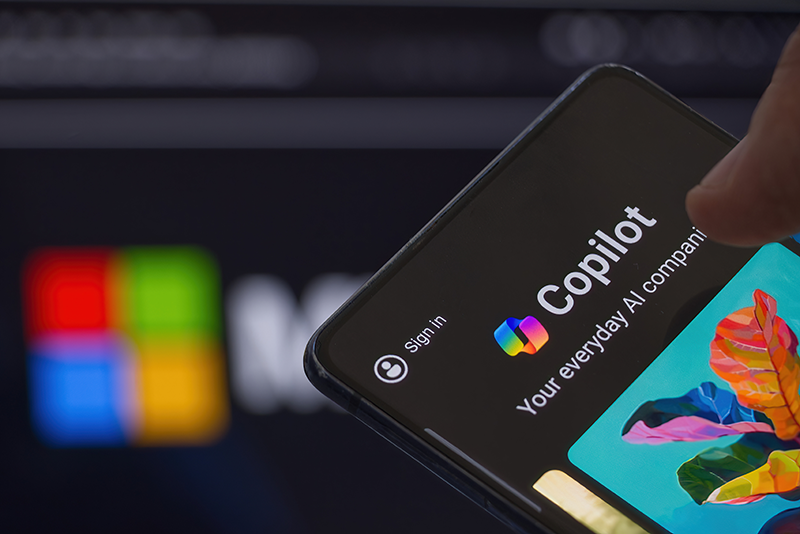
Bing's reach extends beyond Bing.com itself. Through its integration across Microsoft Edge, Copilot, Windows devices, Yahoo, Xbox, and other partner platforms, Bing powers a much larger portion of the search ecosystem than many businesses realize.
Bing’s Audience is Smaller But Often More Valuable
Search volume alone does not determine the value of a platform. In many cases, who is searching matters just as much—if not more—than how many people are searching. This is where Bing distinguishes itself.
Bing's user base tends to skew toward older, more established, and higher-income individuals. In the United States, approximately 41% of Bing users report household incomes exceeding $100,000 annually. Additionally, a significant portion of users fall within the 35+ age range, representing experienced professionals and decision-makers rather than early-stage consumers.
Device usage further reinforces this trend.
Bing sees strong adoption on desktop devices, particularly within workplace environments where Microsoft products such as Windows and Edge are standard. This means a large portion of Bing searches occur during business hours, often in contexts tied to research, evaluation, and purchasing decisions. For B2B organizations, this distinction is critical.
Rather than casting a wide net, Bing provides access to an audience that is more likely to:
- Be actively engaged in professional decision-making
- Have purchasing authority or influence
- Be researching services, vendors, or solutions during the workday
In this context, Bing's smaller audience can actually represent a higher concentration of qualified traffic.
For businesses focused on generating high-value leads—not just volume—this makes Bing a strategically important channel. The platform may not deliver the same scale as Google, but it can offer greater efficiency in reaching the right audience at the right time.
Bing’s Ecosystem is Bigger Than Many Businesses Realize
One of the most common misconceptions about Bing is that its influence is limited to its search engine alone. In reality, Bing functions as the backbone of a much broader ecosystem that spans multiple platforms, devices, and user experiences.
Bing powers search across:
- Microsoft Edge (the default browser on Windows devices)
- Windows operating system search functionality
- Yahoo search
- Microsoft Maps
- AI-driven tools like Microsoft Copilot
When these integrations are taken into account, Bing's reach expands significantly, particularly in desktop and enterprise environments. In fact, Bing-powered experiences account for up to 25% of desktop searches in the United States. This expanded footprint has important implications for visibility.
Optimizing for Bing positions your business across an interconnected network of Microsoft-powered experiences. Whether a user is searching from their browser, their desktop, or an AI assistant, Bing's index often plays a central role in delivering results. This is especially relevant as search behavior continues to evolve.
With the rise of AI-driven interfaces like Copilot, users are increasingly interacting with search in more conversational and integrated ways. Rather than navigating to a traditional search engine, they may initiate queries directly from their desktop, browser sidebar, or embedded AI tools—all of which are frequently powered by Bing. For businesses, this means visibility on Bing extends into a broader digital ecosystem where search, AI, and user experience are becoming increasingly interconnected. Organizations that recognize and optimize for this ecosystem position themselves not just for today's search landscape, but for where it is heading.
Bing Webmaster Tools: An Overlooked SEO Advantage
Bing Webmaster Tools is no longer just an alternative to Google Search Console, it is one of the first platforms to give businesses measurable insight into how their content performs inside AI-generated search experiences. At a foundational level, the platform delivers many of the same core capabilities marketers rely on elsewhere. With Bing Webmaster Tools, users can:
- Monitor crawl activity and indexation
- Submit and manage sitemaps
- Identify technical SEO issues that may impact visibility
- View detailed backlink reporting
- Research keywords and identify search opportunities
In addition, Bing Webmaster Tools integrates with IndexNow, allowing businesses to instantly notify search engines when content is added, updated, or removed—significantly accelerating the indexing process compared to traditional crawl-based discovery.
Bing's AI Performance Insights
Bing recently introduced AI Performance insights within Webmaster Tools, giving businesses unprecedented visibility into how their content is used across Microsoft Copilot, AI-generated summaries in Bing search, and partner AI integrations. According to Microsoft's Bing Webmaster Blog, this feature allows site owners to track how often their content is cited within AI-generated responses—something most traditional analytics platforms do not currently measure (especially not for FREE).
While much of the industry is still guessing how to quantify success in AI-driven search, Bing is already providing the data.
Through the AI Performance dashboard, businesses can track:
- Total citations, indicating how often their content is referenced in AI-generated responses
- Average cited pages, highlighting the breadth of content contributing to AI answers
- Grounding queries, which reveal the prompts AI systems use to retrieve and cite their content
- Page-level citation activity, identifying which URLs are most influential
- Visibility trends over time, showing how frequently a site is cited across Bing and Copilot environments
These metrics introduce a new layer of insight into what is increasingly being called Generative Engine Optimization (GEO), the practice of optimizing content not just for rankings, but for inclusion in AI-generated answers.
The implications are significant. For example, a single blog post may generate minimal direct traffic, but if it is repeatedly cited in AI-generated responses, it could be influencing dozens—or even hundreds—of unseen customer interactions. In this model, value is no longer limited to clicks, it extends to visibility within the decision-making process itself.
For B2B organizations, this insight into AI performance is particularly critical. Decision-makers are increasingly relying on AI tools to synthesize complex information quickly. If your content is consistently cited in those experiences, your brand becomes part of the answer, often before a user ever visits your website.
From a strategic standpoint, Bing's rollout of AI Performance insights positions it ahead of many competitors in one key area: providing tangible, actionable data around AI search visibility. For businesses willing to look beyond Google, Bing Webmaster Tools offers not just another analytics platform, but an early advantage in understanding and optimizing for the next evolution of search.
Bing Places for Business Strengthens Local SEO
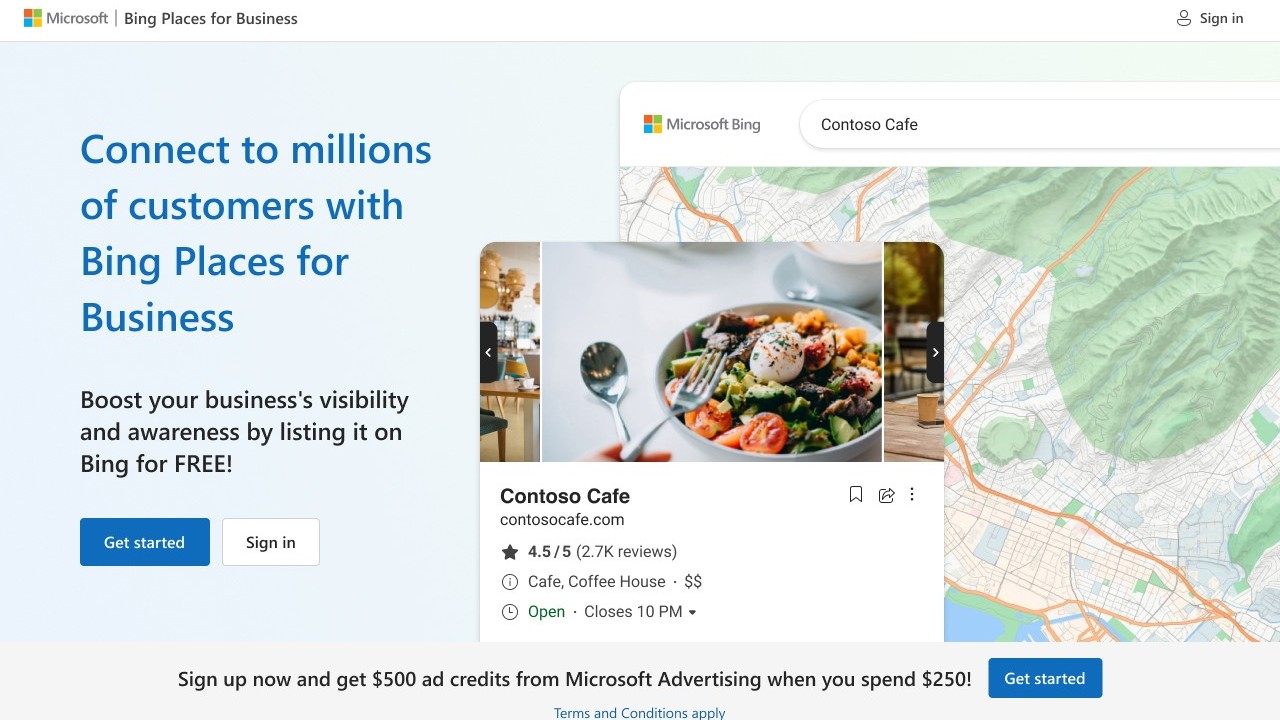
Did you know that Bing offers a comparable platform to Google Business Profile?
That platform is Bing Places for Business: a simple way to expand local visibility (with less competition) that doesn't require significant effort to claim and manage.
What Bing Places Allows You to Control
At its core, Bing Places for Business functions much like Google Business Profile, giving businesses direct control over how they appear across Bing search results, Microsoft Maps, and AI-powered Microsoft experiences.
Through Bing Places, businesses can manage:
- Business name, address, and phone number (NAP)
- Hours of operation and service details
- Photos and brand presentation
- Customer reviews and ratings
- Business categories and attributes
This structured data plays a critical role in how your business is discovered across local search experiences.
Less Competition, Meaningful Reach
Being overlooked has its advantages: Bing Places for Business is largely underutilized by businesses when compared to Google Business Profile. Many Bing listings remain unclaimed, incomplete, or outdated. This creates a clear competitive gap. Businesses that take the time to optimize their Bing Places listing can often achieve greater visibility with less effort.
Bing's primary audience and user base is also a gold-mine for businesses targeting professionals and decision-makers.
A Low-Effort, High-Impact Opportunity
One of the most compelling advantages of Bing Places is how easy it is to implement. Businesses can import their existing Google Business Profile data directly into Bing Places, dramatically reducing setup time and effort.
The opportunity becomes even clearer when viewed through a strategic lens:
- Less competition than Google Business Profile
- Access to a high-value, professional audience
- Expanded visibility across Microsoft's ecosystem
- Increased likelihood of appearing in AI-driven search experiences
The reality is straightforward: if your business is investing in local SEO but ignoring Bing Places, you are leaving visibility—and potential customers—on the table.
It’s Time To Leverage Bing As A Competitive Advantage
From Bing Places for Business, which controls how your organization appears in local and map-based results, to Bing Webmaster Tools, which now provides insight into both traditional SEO performance and AI-driven visibility, the platform offers a comprehensive set of tools that many businesses have yet to fully utilize.
Here's the TLDR for business owners and SEO professionals about what Bing brings to the table:
- A measurable share of search traffic that competitors may be ignoring
- Access to a high-value audience of professionals and decision-makers
- Lower competition in both local, organic, and paid search environments
- Early insight into how your content performs in AI-generated search experiences
Staying ahead of the competition requires building a presence across the right channels and ecosystems where your audience is searching, researching, and making decisions. If you can do it with low effort and no cost? It's an easy win.
Businesses that take a more comprehensive approach to search that includes Bing can position themselves to capture opportunities most others miss.
Let's Strengthen Your Search Strategy
At KDG, we help businesses go beyond surface-level SEO to build strategies that drive meaningful visibility, qualified traffic, and long-term growth. Whether it's optimizing your presence across multiple search engines, improving your local listings, or preparing your content for AI-driven search experiences, our team brings the expertise needed to execute with confidence.
If your organization hasn't yet explored the full potential of Bing, now is the time.
Let's start the conversation.

Caitlin Nelson is a skilled marketing professional with a passion for creativity, communication, and strategic planning. With years of marketing experience under her belt, she brings a wealth of expertise to clients and KDG.

