


Article
Managed Accounting, Tax Accounting
Retirement 101: Backdoor Roth IRAs
Posted on May 10, 2024
By Michele Roletter
October 22, 2026
Would you be surprised to learn that 50% of Americans can’t afford their retirement lifestyle? This is why saving for retirement early on is crucial. However, Uncle Sam doesn’t always make it easy for high-earners to put away their hard-earned money in tax-advantaged retirement accounts. With income limitations on Roth IRA accounts, you may need to get creative on how you build your nest egg. This is exactly what a Backdoor Roth IRA conversion accomplishes, transferring funds from a Traditional IRA into a Roth IRA.
Roth IRAs offer various benefits, including tax-free growth within the account, the ability to access certain funds before age 59 ½, and tax-free withdrawals. Building up these benefits starts with making contributions.
In this article, we’ll explore Backdoor Roth IRA contributions, including a step-by-step guide on making contributions, tax implications to be aware of, and how to report this transaction on your individual income tax return. If you have any questions on whether a Backdoor Roth IRA contribution is right for you, contact a qualified financial planner or tax accountant.
Understanding the Backdoor Roth IRA
Backdoor Roth IRAs have become a popular option for high earners, allowing them to bypass income restrictions associated with a direct contribution. Let’s first differentiate between Traditional IRA and Roth IRA contributions.
Traditional IRA contributions are generally made with pre-tax dollars, resulting in taxable earnings and withdrawals. Since Traditional IRAs aren’t handled through payroll, the IRS lets taxpayers claim a deduction on their individual income tax return in the year the contribution is made, lowering taxable income.
On the contrary, Roth IRA contributions are made with post-tax dollars. This means there is no upfront tax deduction for contributions made, but you do enjoy tax-free growth and withdrawals during retirement.
The IRS limits direct Roth IRA contributions based on income levels. For the 2024 tax year, taxpayers filing as single who earn over $161,000 ($240,000 for married filers) are not eligible to contribute to a Roth IRA directly. Similarly, not all Traditional IRA contributions are deductible on your individual income tax return. If your income exceeds $87,000 as a single filer or $143,000 as a married filer, you aren’t able to deduct Traditional IRA contributions. This leads to no tax benefit from using the account, as earnings and withdrawals are taxable.
Instead of making nondeductible Traditional IRA contributions, you can convert this contribution to your Roth IRA using a backdoor conversion. This allows you to leverage tax-free growth and withdrawals within the account, even as a high-income earner.
Step-by-Step Guide to Making a Backdoor Roth IRA Contribution
The process of making a Backdoor Roth IRA contribution is relatively straightforward, with no income or age limits. However, there are contribution limits that you must abide by. For the 2024 tax year, taxpayers can make $7,000 in contributions. Taxpayers over the age of 50 can make an additional $1,000 catch-up contribution.
These limits are per taxpayer. If you have a spouse, you can each contribute $7,000 if you are under the age of 50 or $8,000 if you are older than 50. Nevertheless, here’s a step-by-step guide on making your Backdoor Roth IRA contribution:
Step #1: Contribute to a Traditional IRA
The first step is making a nondeductible contribution to a Traditional IRA. In this step, you will transfer after-tax dollars to a Traditional IRA account. You can either pay a lump sum up to the limit or spread the amount out over a few years. For simplicity purposes, most taxpayers elect to make one lump sum payment.
Step #2: Convert the Traditional IRA to a Roth IRA
Next, you will need to reach out to your IRA sponsor, which is the company that your account is through. Your IRA sponsor will be able to initiate the conversion process. It can be helpful to hold both your Traditional and Roth IRA accounts with the same sponsor to avoid any mistakes in the conversion process.
Step #3: Report to the IRS on Form 8606
When you file your individual income tax return, you will need to report the transaction to the IRS. In most cases, your IRA sponsor will issue Form 1099-R which outlines the transaction. This form will then flow through to Form 8606, which shows the funds transferred. Currently, there are no provisions limiting this process from being completed each year up to the contribution limits.
Figures and Illustrations
It can be hard to understand what the Backdoor Roth IRA contribution process looks like without seeing the forms and income limits. Below are some graphs and charts. Keep in mind that the tax forms are from the 2023 tax year. The IRS adjusts the forms each year, so the line items and reporting can change by the time you file your next return.
Figure 1: Income Limits for Roth IRA Contributions
The below chart summarizes the 2024 income limit for direct Roth IRA contributions. High earners quickly meet the income limit threshold, which is why Backdoor Roth IRA contributions are a popular option to gain access to tax-deferred retirement savings.

Figure 2: Visual Guide to the Backdoor Roth IRA Process
Below is a summary of the steps involved in completing the Backdoor Roth IRA process.

Figure 3: Sample Filled Form 8606 for Nondeductible Contributions
The below image is an example of what Form 8606 will look like for nondeductible IRA contributions. In the example, the taxpayer made a $6,000 contribution and has $10,000 of prior contributions.

Figure 4: Sample Filled Form 8606 for Roth Conversion
Reporting a Backdoor Roth IRA conversion is relatively simple and only fills out two lines on Form 8606, Part II. Below is what the form will look like.
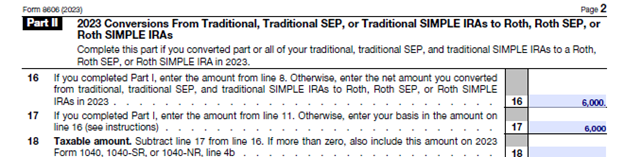
Figure 5: Sample Worksheet of Phased-Out Direct Contribution
The below image demonstrates how the income limits apply to Roth IRA contributions for a married-filing-joint taxpayer. Remember, this form uses 2023 income and contribution limits.

Tax Implication and Considerations
Backdoor Roth IRA conversions aren’t always clear-cut. In fact, there are some instances where your contribution might be deemed taxable income by the IRS. This commonly comes into play when you have contributions within your Traditional IRA account that were previously deducted. For example, let’s say that you opened a Traditional IRA account and contributed $4,000 over the past two years. Your income was under the threshold, and you were able to lower your taxable income when you filed your return.
Now, let’s say that you’ve been researching the power of Roth IRA accounts and want to make a conversion. You decide to pull out the $4,000 and put the funds in a Roth IRA. The IRS doesn’t allow you to double-dip on the tax benefits, meaning the $4,000 would become taxable income in the year it’s converted to your Roth account.
The same is true for growth within your IRA account. Let’s say that you made $5,000 in nondeductible contributions, but you forgot to take advantage of the Backdoor Roth IRA strategy. In the next year when you go to convert your funds, your balance is now $5,500. The $500 in growth will become taxable income on your individual tax return. This is why many individuals choose to make a contribution and leverage the Backdoor Roth IRA in the same year.
Furthermore, the IRS doesn’t allow you to pick and choose which contributions are deductible and nondeductible. Instead, the taxable amount will be determined based on the ratio of deductible to nondeductible contributions. Let’s say that you have $6,000 in contributions to your Traditional IRA. Of this $6,000, 75% of contributions were nondeductible. If you were to convert $3,000 to a Roth IRA, 25% of your funds, or $750, would be taxable.
Common Mistakes and How to Avoid Them
Although we only laid out three necessary steps when making a Backdoor Roth IRA contribution, the process can quickly become complex. Here are some common mistakes and how to avoid them:
Mismatching Tax Years
Mismatching tax years for contributions is a common mistake made, especially when the IRS allows you to contribute funds for the current tax year up until April 15th of the next tax year. For example, a 2024 contribution would be due by April 15th, 2025.
Mismatched tax years make the entire process more complex, especially when there is growth within the account. To maximize your tax savings, you want to make the contribution to the Traditional IRA and move it to your Roth IRA in the same year.
Neglecting to Factor in Taxable Contributions
Receiving an unexpected tax bill at the end of the year is unfortunately the reality when you’ve deducted contributions in the prior year. The deductibility of contributions isn’t found within your IRA account but instead will be reported on your individual income tax return. You will need to go back and verify that you did not deduct IRA contributions from taxable income in the year you made the contribution.
If you did deduct the contribution, save up some extra money for tax time. Once again, making a Traditional IRA and Roth IRA contribution in the same tax year helps you keep your tax bill to a minimum, as you can ensure that the contribution is nondeductible.
Making Direct Contributions Instead of Backdoor Contributions
It can be easy to get confused when making direct and backdoor contributions, especially if you are managing the movement of money yourself. If you accidentally make a direct contribution to a Roth IRA and you are over the income limit, there can be additional penalties and fines imposed on your individual return.
To avoid this issue, make sure you work with a professional who can help you facilitate the transaction. This can save you a headache when tax time rolls around.
Holding Too Many Accounts
Holding too many accounts can also complicate the Backdoor Roth IRA contribution process. It’s best to have one Traditional and one Roth account when leveraging Backdoor Roth IRA contributions. This helps you track deductible and nondeductible accounts and ensures that your transfers are going to the right account.
Conclusion
Backdoor Roth IRAs can be a great strategy to tuck away tax-free income for retirement. However, you need to meticulously follow IRS guidelines for reporting to avoid an unexpected tax bill. This makes working with a proper tax professional important. The right tax accountant or financial planner can help you facilitate the Backdoor Roth IRA process and accurately report the transaction on your tax return.

Michele Roletter, CPA, is an accomplished Accountant, bringing a wealth of knowledge and expertise to her current CPA role at KDG. Experienced in Sage Products, Tax Preparation, GAAP, Financial Accounting and Managerial Accounting. Michele has spent her career overseeing tax preparation and accounting services at a multitude of organizations.

