


Article
Business Process, Marketing
Client Personas for B2B: The Secret to Better Targeting, Onboarding, and Retention
Posted on September 10, 2025
By Caitlin Nelson
October 22, 2026
If you’ve spent any amount of time working in the B2B industry then you know that no two clients are alike. Some move fast and make decisions on gut instinct, while others require months of data, demos, and approvals before signing a contract. Some are price-sensitive; others are motivated by innovation. This variability can make it difficult for sales, marketing, and service teams to stay aligned and deliver consistent value.
Enter the client persona deck.
A client persona is a fictional but realistic representation of a type of client your business works with regularly. Creating a deck of these personas can provide your team with an invaluable tool to help anticipate client needs, refine targeting strategies, and smooth out every stage of the client relationship — from first contact to long-term partnership.
Why Companies Should Build Client Personas

Humanizing the Client Base
Numbers and job titles don’t tell the whole story. Personas give life to client segments by turning them into relatable characters. “Dana the Procurement Director” is easier for a team to discuss and relate to than “enterprise procurement contacts.” Personas bring empathy into business strategy, helping employees remember they are dealing with real people who have real priorities.
Anticipating Client Needs and Challenges
Every client type presents predictable obstacles. A CFO might delay approvals until ROI is proven; a small business owner might struggle with budget constraints. Documenting these challenges in personas lets your team prepare solutions ahead of time instead of reacting under pressure.
Improving Sales & Marketing Alignment
Sales often complain that marketing doesn’t generate the right leads, while marketing insists sales don’t follow up properly. Personas bridge this gap by clearly defining which clients you want to attract and how to speak to them. Marketing creates messaging tailored to each persona across your organization’s various platforms.
Especially now with how developments in AI are affecting SEO, it is imperative to know your audience and tailor your content to their needs. Building a persona deck provides an invaluable tool for this and when your messaging is defined, Sales can use the same language to convert.
Streamlining Onboarding and Service Delivery
Once a client signs, the hard work begins. Personas help service teams quickly identify communication preferences, decision-making styles, and likely roadblocks. For instance, onboarding a “skeptical technical buyer” might mean front-loading detailed documentation, while an “overloaded small business owner” may prefer concise checklists and direct support.
Enhancing Long-Term Client Relationships
Retention is just as important as acquisition in B2B. Personas help account managers nurture clients over time by focusing on their evolving goals and motivations. If your persona deck tells you that “innovative department heads” crave novelty, you know they’ll appreciate early access to beta features or thought-leadership content. Client personas can also help remind the team that beyond being just a client, these are people with outside lives, hobbies, and favorite sports teams. Learning these unique bits from your actual clients can help you personalize long-term communication and appreciation gifts.
How to Use A Client Persona Deck Strategically
Finding and Targeting Clients
Personas help narrow the search for ideal clients. Sales teams can qualify prospects by checking whether they fit existing persona patterns, saving time and effort. Marketing can craft campaigns that resonate with specific persona triggers, such as budget cycles or new technology trends.
Onboarding New Clients
The moment a new client signs, teams can assign them to a persona. This acts like a cheat sheet, allowing teams to anticipate communication preferences and challenges before they even begin. For example, a “cost-cutting CFO” persona tells you to lead with efficiency and ROI metrics.
Managing Projects & Overcoming Challenges
Projects rarely go smoothly, but with personas you can anticipate common sticking points. If your client matches the “partnership-focused agency owner,” you’ll know scope changes are likely, so you can build flexibility into your contracts. If they resemble the “skeptical technical buyer,” prepare detailed integration documentation in advance.
Aligning Internal Teams
A persona deck serves as a shared reference point across departments. Marketing, sales, technology, development, and service can all align around the same set of client archetypes, ensuring consistent messaging and experience at every touchpoint. These personas also enable your teams to more effectively cross-communicate when project targets change or issues arise. When everyone is familiar with how to work with certain client persona types, solutions and answers are made more efficiently.
Driving Continuous Improvement
Personas aren’t static. Each new client interaction provides an opportunity to refine your persona deck. Over time, this living document becomes a highly accurate tool for predicting behavior and optimizing client strategy.
Get a new client in that doesn’t quite fit within a certain persona? Create a new one! Your persona deck can (and should!) grow and evolve with your client base.

Making Your Client Persona Deck Actionable
Creating a Persona Library (Deck)
Start with 3–6 personas that cover most of your client categories. Each persona should include demographics, role, behavior, goals, challenges, buying triggers, and personal context.
Embedding Personas in Operations
Make personas part of daily workflows:
- Sales playbooks: reference persona challenges during calls.
- Onboarding checklists: align processes with persona preferences.
- Project reviews: evaluate team performance against persona expectations.
Enlist Client Persona Decks into Team Building Exercises
It’s not enough to build your persona deck, putting it to use across your department teams is where you’ll truly begin to see the magic. Once a month, get your teams together and present them with the Client Persona Challenge. Select a persona card from your deck, create an imaginary issue or situation that this client may be having with the company or their project, and see how your teams respond. This can help you uncover gaps in communication and implementation not just with your clients, but between departments as well.
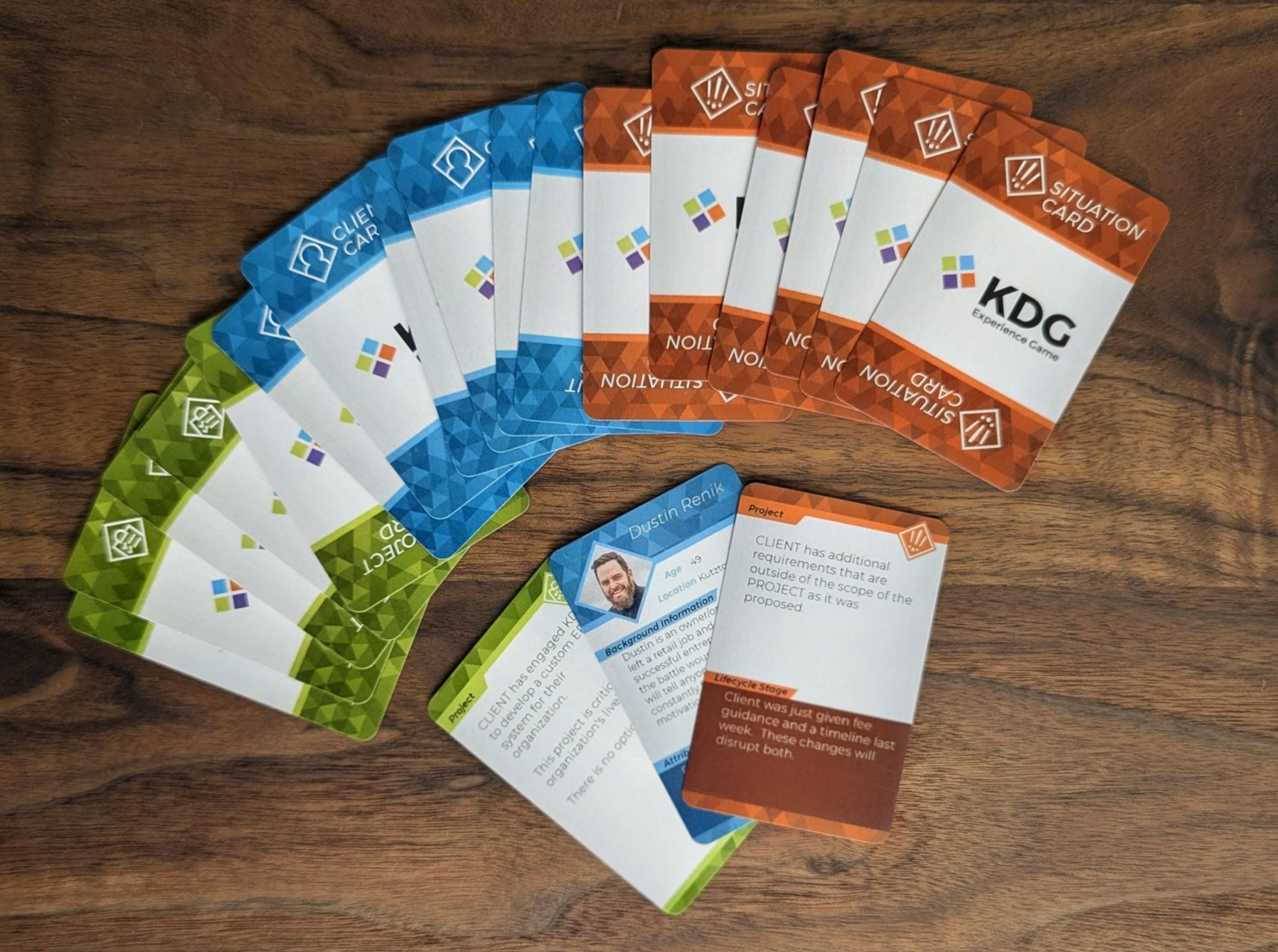
The KDG Custom-Designed TOFUU Client Persona Deck
At KDG we run this challenge about once a month within our departments to keep our team members actively involved in our client project processes and communications, even if they don’t usually participate within these procedures directly. It helps bring fresh ideas and perspectives to the table with those that do!
Keeping Personas Updated
Markets change, and so do clients. Review your personas annually to ensure they reflect current realities. Involving sales, marketing, and service teams in updates keeps them accurate and widely adopted.
Conclusion
Building client personas is not just an exercise in marketing creativity. It’s a practical, strategic tool that improves alignment, accelerates onboarding, reduces project friction, and deepens client relationships. By creating and maintaining a deck of personas, B2B companies give their teams a shared language and foresight into client behavior.
Start with a few personas, refine them with real-world experience, and integrate them into your processes. Over time, you’ll find that personas don’t just describe your clients — they shape the way you work with them for better results at every stage.
Client Personas FAQ
1. What is a B2B client persona?
A B2B client persona is a fictional but realistic profile of a typical type of client your business serves. It includes details such as job title, role in decision-making, goals, challenges, and buying behavior.
2. How are B2B client personas different from D2C customer personas?
B2B client personas represent businesses and the people within them who make buying decisions, often as part of a team or committee. They focus on firmographics (company size, industry, budget) and decision-making processes.
D2C (direct-to-consumer) personas, on the other hand, represent individual shoppers and emphasize demographics, lifestyle choices, and personal buying habits. In short: B2B personas are about group decision dynamics in a business context, while D2C personas are about individual consumer preferences.
3. Why are client personas important in B2B?
They help companies anticipate client needs, improve onboarding, align sales and marketing strategies, optimize content for search engines and AI search platforms, and handle challenges more effectively during projects.
4. How many client personas should a company create?
Most companies start with 3–6 core personas that cover their main client types. Too few won’t capture the diversity of your client base, while too many can overwhelm teams.
5. How do you create a client persona deck?
Start by analyzing your best current clients, group them into categories, and build a fictional profile for each type. A deck is simply a collection of these personas, usually in a one-page format for easy reference.
6. How often should client personas be updated?
At least once a year, or whenever you notice significant changes in your client base, industry trends, or sales cycles. A persona deck should be treated as a living document.

Caitlin Nelson is a skilled marketing professional with a passion for creativity, communication, and strategic planning. With years of marketing experience under her belt, she brings a wealth of expertise to clients and KDG.

